Americanos Forever
La Raza Americas
DIVERSITY IS OUR STRENGTH!
About The Book
From his personal, social, educational, military and professional experience, Dr. Ruben Botello presents a powerful narrative challenging White racism throughout the Western Hemisphere and entire world with a vision rooted in agape love, compassion, mutual respect, dignity, equity and justice for everyone.
Beyond calling for multicultural appreciation, this piercing narrative calls for the over 750 million multilingual Americanos in the Americas — also known as Indigenous, La Raza, Latinos and Hispanic — to rise up against White racism wherever, whenever and however it raises its putrid head. Unlike racists, Americanos are well integrated from all the races, colors, nationalities, ethnicities, cultures, religions and creeds of the world.
Alongside Elon Musk, Stephen Miller, Peter Hegseth and other avowed racists, this Hitler-inspired president strives to turn the USA into an apartheid state like in Musk’s past South Africa homeland. The President is prominently listed on the “Epstein List” with evidence of human trafficking, child trafficking, rape and murder and is a convicted felon revealing the racist’s proclivity for fraud and serious criminal behavior.
Dr. Botello plans to establish an international association of Americanos and other concerned citizens of the world to help stop child kidnapping and find missing children, and to see child kidnappers, traffickers and predators brought to justice throughout the Americas and world including those on the Epstein List.
The Americano is also lobbying for President Trump to stop arresting immigrants with no serious criminal records, and to release those with no serious criminal records immediately.
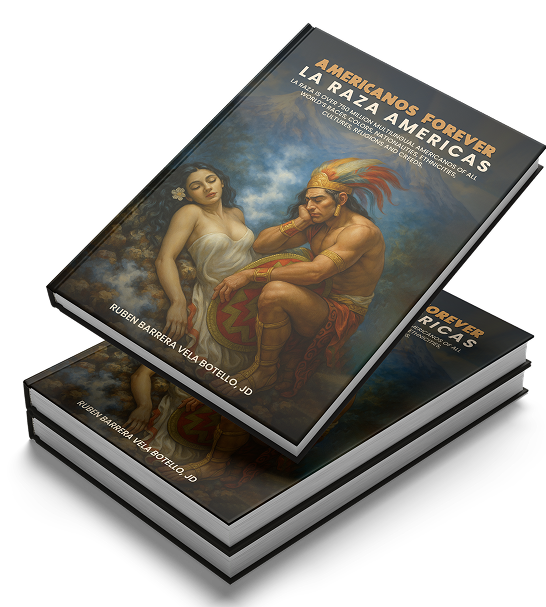
Discover a powerful vision for the Americas rooted in
courage, conviction, and compassion.
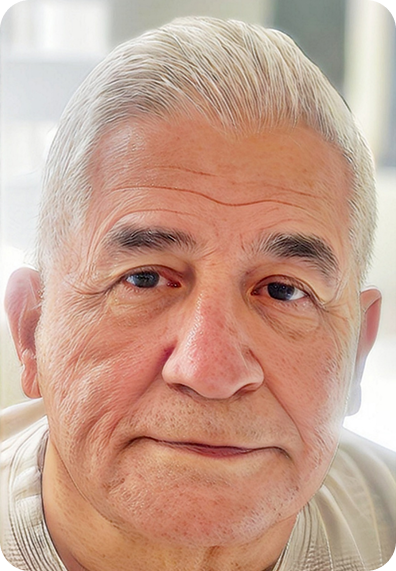
About The Author
Ruben Botello was born and raised on the Gulf Coast of South Texas near Corpus Christi. He was the fifth of eight children who grew up in poverty on the other side of the tracks.
The little Tejano started elementary school knowing no English and was ridiculed by some of his White classmates for being a Chicano (American of Mexican descent). Although he did learn English, Ruben also learned to hate school and wanted to quit by the third grade but Texas law would not allow it. Fortunately, the Chicanito was invited to play in the school band and it kept his interest through high school.
During his 1965 senior year, Ruben and his family moved to Southern California in search of work and better lives. After high school, the young graduate joined the Marines to fight in Vietnam and was assigned to the Parris Island Marine Corps Band after boot camp and infantry training. In 1968, he was assigned to the First Marine Division Marine Corps Band in Vietnam and returned to civilian life in 1969.
The Vietnam veteran wound up in and out of homelessness as he grappled with anger, restlessness and unemployment. He went to college on the G.I. Bill as a pre-law student and joined the Vietnam Veterans for Peace against the Vietnam War.
Ruben eventually earned journalism and political science degrees, and a jurisdoctorate degree while being actively involved in the Chicano and other human rights movements on California campuses and in their communities. He also worked in community crime prevention programs and taught Chicano Studies at Ventura College and Humboldt State University.
The ardent activist worked with the Northern Indian California Education Project and Communication Council on Coastal Indians for the Humboldt County Superintendent of Schools. While teaching at Humboldt State University, he established the American Homeless Society to organize and advocate for homeless rights in Northern California and beyond.
Connect With the Author
Read Full Biography
What Readers Are Saying
“A courageous and timely voice in the conversation about identity and unity in the Americas.”
Ruben Barrera Vela Botello presents a powerful perspective that challenges traditional divisions and invites readers to think beyond borders. His reflections are both deeply personal and socially significant, making this an important
contribution to modern cultural dialogue.
Cultural Studies Scholar